We’re in the middle of a little glow-up. Some links may not be available just yet, but we’re working behind the scenes to bring everything to life. Thank you for being here while we build something beautiful for you.



Bedtime Separation Anxiety: How to Help Your Toddler Sleep (Without the Tears)
It was 8:47 pm. Again.
The bath was done, the pajamas were on, and the book had been read twice. And still, there were two tiny hands gripping the crib rail, and two enormous eyes staring up at me like I was about to disappear off the face of the earth.
"Stay, Mama. Stay."
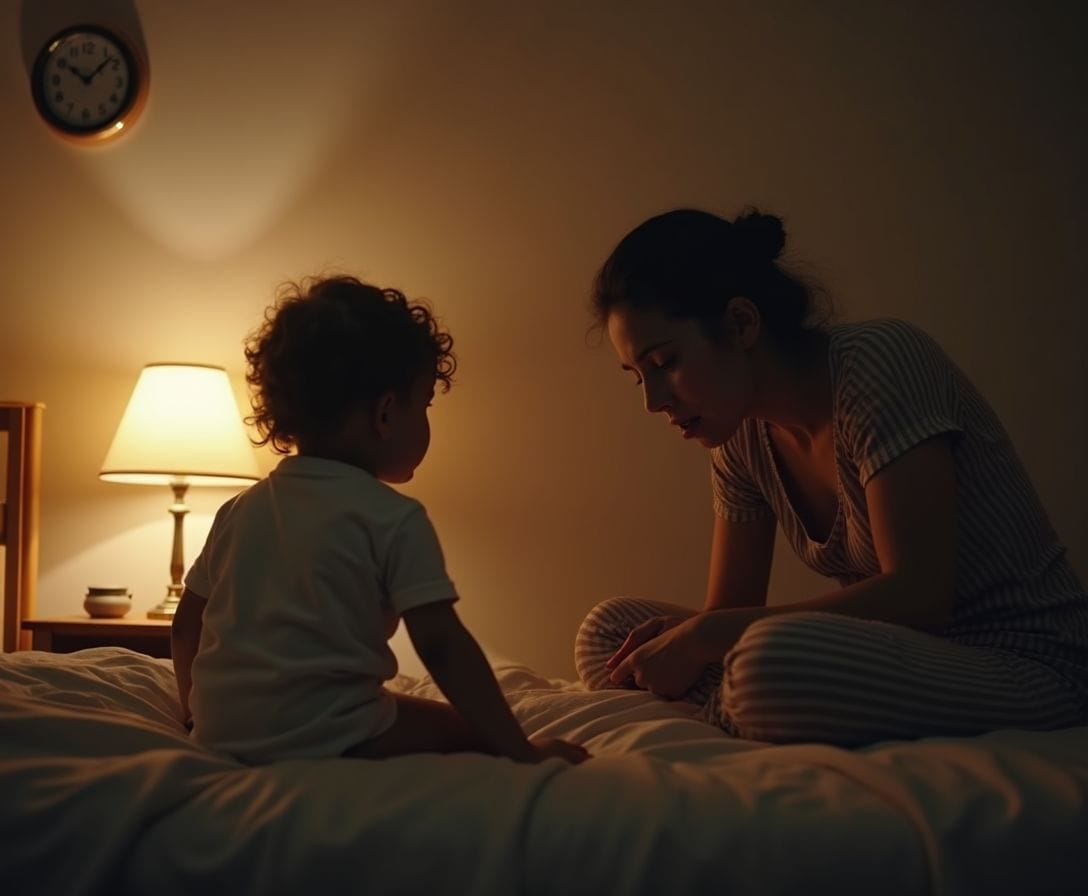
If that sentence lives in your chest the way it lived in mine, you're in the right place. Bedtime separation anxiety is one of those things nobody warns you about — and one of the loneliest parts of toddler parenting to navigate alone at the end of a very long day.
Let's talk about what's actually happening, and — more importantly — what gently helps.
What Is Bedtime Separation Anxiety in Toddlers?

Separation anxiety is developmentally normal — it peaks between 9 months and 18 months, and can resurface between ages 2 and 3. At bedtime, it tends to feel more intense because sleep genuinely requires letting go: of you, of the day, of stimulation and connection.
For toddlers, who have no real concept of time, "Mama is leaving" and "Mama might not come back" can feel indistinguishable. That fear is real for them, even if we know we'll be back in 0.3 seconds.
This is not your child being manipulative. This is their nervous system doing exactly what it was designed to do — seek proximity to their safe person when they feel vulnerable.
Signs Your Toddler Has Bedtime Separation Anxiety
Crying immediately when you move toward the door
Asking repeatedly for "one more" — hug, song, drink, story
Complaining of stomachaches or headaches only at bedtime
Getting out of bed multiple times to find you
Difficulty falling asleep without physical contact
Sudden regression in a child who previously slept independently
If you're seeing 3 or more of these regularly, you're likely dealing with bedtime separation anxiety — and the approach matters.
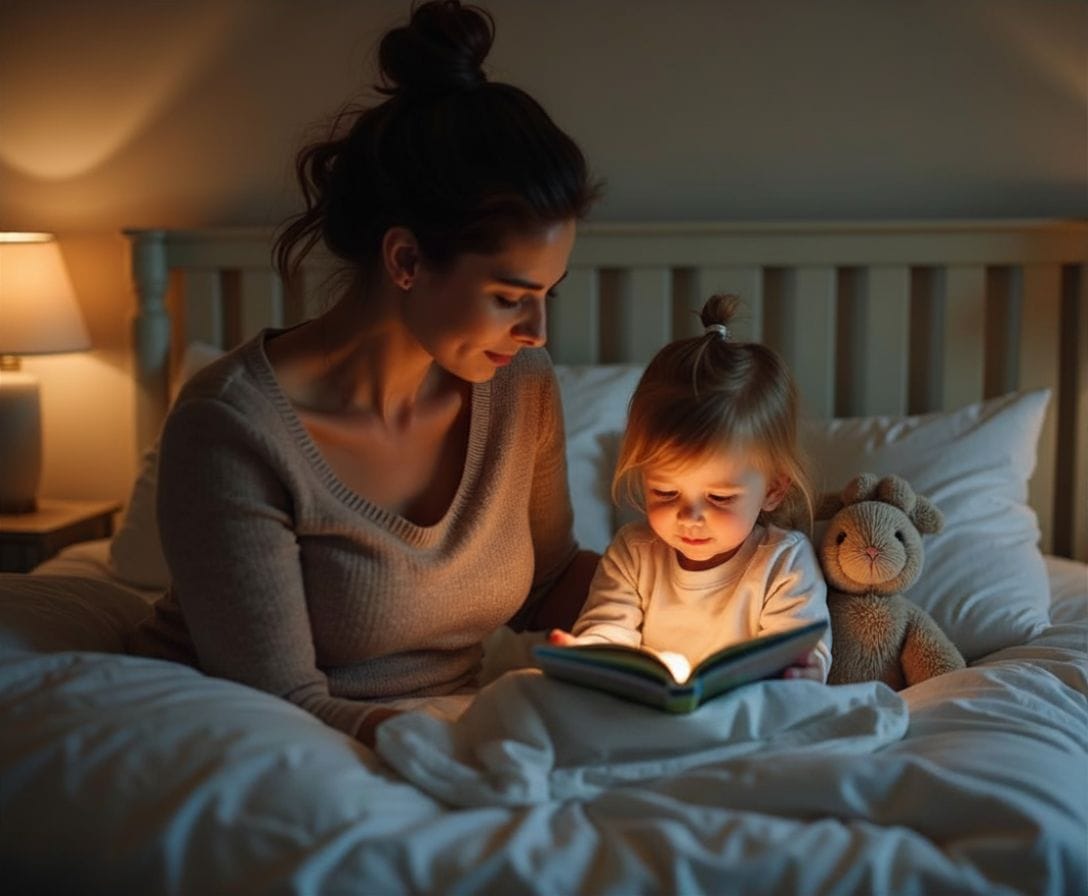
5 Gentle Steps to Ease Bedtime Separation Anxiety
1. Build a consistent, predictable bedtime routine
Toddlers regulate their nervous systems through repetition. When the sequence of events is always the same — bath, pajamas, book, song, lights out — the brain begins to associate that sequence with safety and sleep. Anxiety thrives in the unknown; routine removes the unknown.
2. Create a "goodbye ritual" they can count on
Instead of a long, drawn-out goodbye that escalates anxiety for both of you, create a short, warm, predictable goodbye ritual. Three kisses on the forehead. A special goodnight phrase. A handprint on the wall. Something that signals "this is the end of our time together tonight — and it's safe."
3. Use a comfort object as a "piece of you"
A stuffed animal, a small square of fabric, or even an old t-shirt that smells like you can serve as a transitional object — a literal piece of your presence that stays with them when you leave. Many pediatric sleep specialists refer to this as a "lovey," and it can be remarkably effective for anxious toddlers.

4. Try the "I'll check on you" reassurance technique
Rather than promising to stay until they fall asleep (which sets up a dependency that's hard to fade), tell them clearly: "I'm going to put the laundry away, and then I'll come check on you." Then do it. Return once or twice in the first 10–15 minutes, briefly and calmly. This builds trust: you said you'd come back, and you did.
5. Validate the feeling without reinforcing the fear
There's a difference between acknowledging your child's emotion and amplifying it. "I know bedtime feels scary sometimes. You are so safe. I love you. Goodnight," says everything it needs to without opening the door to a negotiation spiral. Naming the feeling helps the nervous system settle; dwelling on it does the opposite.
6. Gradually increase your distance over several nights
If your toddler needs you to be present to fall asleep, you don't have to go cold turkey. Try sitting on the bed, then the floor beside the bed, then just outside the door — over several nights. This is sometimes called "chair fading", and it's a gentle, gradual approach that respects their attachment needs while slowly building their capacity to self-settle.
7. Check the environment
Sometimes what looks like separation anxiety has a sensory component. Is the room too dark? A small nightlight can make a significant difference. Too quiet? White noise or soft music can help. Too warm? Comfort plays a larger role in sleep readiness than we often give it credit for.
When Does Bedtime Separation Anxiety Get Better?
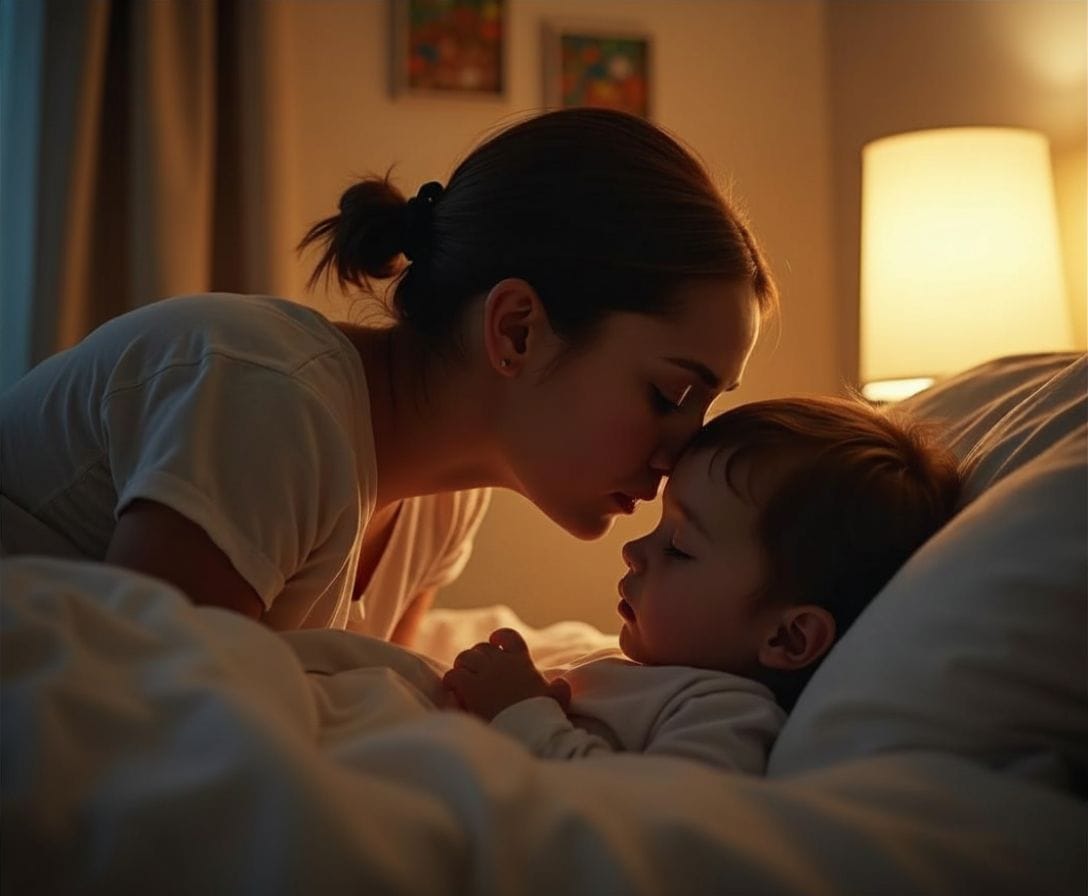
For most toddlers, the intensity of bedtime separation anxiety decreases between ages 3 and 4, as language develops and they gain a better understanding that you will return.
Consistency in your response — warm, calm, and predictable — is the single biggest factor in how quickly they build that trust.
It won't feel linear. There will be setbacks during illness, travel, transitions (a new sibling, a new home, a change in daycare).
That's completely normal and doesn't mean you're back at square one. It means your toddler is human.
You're not doing it wrong. You're doing the hardest, most loving kind of right — showing up, staying calm, and teaching your child that bedtime is safe.
About the Author/s:
Mia Moon
Child Development & Family Routines Creator
Mia is the founder of SamCreates, a resource hub for families building calmer daily routines. Grounded in child development and emotional regulation research, she creates stories and printable tools that help young children navigate big transitions — including bedtime — with more ease and less stress. Her work is rooted in a simple belief: small, intentional systems can completely shift the emotional energy of a home.
Toni Parkers
Mom of Three · Co-Creator & Contributing Writer
Toni is a mom of three who knows firsthand what it's like to dread 8 o'clock. After years of drawn-out routines, endless requests for water, and little ones who simply refused to stay in bed, she made it her mission to find what actually works - not just in theory, but in a real, busy household. Her real-life experience and trial-and-error wisdom shape the heart of every tool and story inside SamCreates - bringing honesty, warmth, and real-mom perspective to everything we create together.






Helping Busy Moms Create Peaceful Evenings and Calmer Homes
Because peaceful homes don’t happen by accident. They’re built through thoughtful structure and gentle routines.
Featured Product

The Complete Peaceful Bedtime Toolkit
Create calm, cozy evenings with your kids
DISCOUNT CODE: EARLYBIRD20
(First 50 Buyers Only)
Copyright Notice
© 2025 SamCreates. All Rights Reserved.
Created with systeme.io